OACDI Blog
Share your thoughts and stay updated with our latest news
OACDI Participates in the Second General Assembly of AFRIFISH-Net in Kenya 11–13 August 2026 | Kenya
Open Arms Community Development Initiative (OACDI) participated in the Second General Assembly of the Pan-African Platform for Non-State Actors in Fisheries and Aquaculture (AFRIFISH-Net), held in Kenya from 11–13 August 2026.
The Assembly brought together civil society organisations and other fisheries and aquaculture stakeholders from across Africa to exchange experiences, discuss emerging priorities and strengthen collaboration around sustainable small-scale fisheries and aquaculture.
AFRIFISH-Net, established in 2021 within the framework of the African Union, serves as a continental platform and voice for fisheries non-state actors. Its work focuses on strengthening the contribution of small-scale fisheries and aquaculture to food security, livelihoods and economic development while promoting sustainable fisheries governance.
OACDI’s Participation
OACDI participated with the aim of contributing to continental discussions, sharing community development experiences and exploring opportunities for partnerships, knowledge exchange and joint programming.
Key areas of discussion included:
• Governance of small-scale fisheries, with emphasis on community participation, co-management and responsible fishing.
• Food and nutrition security and wealth creation, recognising the importance of fisheries to household nutrition, livelihoods and local economies.
• Strategic partnerships and collaboration among civil society organisations, government institutions, research organisations, fisheries bodies and development partners.
• Capacity development and investment promotion to strengthen the capacity of fisher groups, community organisations and other local actors.
• Climate resilience, gender and social inclusion within fisheries and aquaculture development.
Key Lessons for OACDI
The Assembly reinforced OACDI’s understanding that fisheries and aquaculture are closely connected to broader community development issues, including livelihoods, food security, nutrition, climate change, environmental sustainability, gender, youth participation and economic development.
The discussions also highlighted the growing importance of evidence generation and knowledge management. OACDI sees an opportunity to strengthen documentation of community-level experiences and use evidence to contribute to policy discussions and programme development.
Climate change was identified as a significant concern for small-scale fisheries and aquaculture, creating opportunities to integrate climate adaptation and environmental sustainability into relevant community livelihood programmes.
The Assembly further emphasised the need for deliberate participation of women, youth and persons with disabilities in fisheries, aquaculture, trade and related economic activities.
Opportunities for OACDI
Participation has opened potential opportunities for OACDI to:
• Build partnerships with national, regional and continental fisheries organisations.
• Support capacity development among small-scale fishers, fish traders and community organisations.
• Integrate sustainable fisheries and aquaculture into livelihood and food-security programmes.
• Promote climate-resilient community development and natural resource management.
• Strengthen evidence generation, documentation and advocacy.
• Support greater participation of women and young people in fisheries-related enterprises and value chains.
• Explore joint project development and resource mobilisation with relevant partners.
Looking Ahead
Following the Assembly, OACDI intends to maintain engagement with AFRIFISH-Net and relevant fisheries and aquaculture stakeholders while assessing practical opportunities for collaboration.
Priority follow-up areas include mapping potential partners, reviewing existing programmes for fisheries and aquaculture entry points, identifying funding opportunities, developing viable project concepts and strengthening OACDI’s knowledge and evidence systems.
OACDI’s participation in the AFRIFISH-Net General Assembly represents an important step in connecting its community development experience with wider African priorities on sustainable fisheries, livelihoods, food and nutrition security, climate resilience and inclusive development.
Report prepared by Nabirimu Damali, Senior Program Officer, Open Arms Community Development Initiative (OACDI), 21 September 2026.
The headline that 4,800 NGOs have collapsed is alarming
The headline that 4,800 NGOs have collapsed is alarming—but the real story goes far beyond numbers. This is not just about organizations shutting down. It is about people, relationships, and invisible systems that have quietly held communities together for years.
Behind every NGO is a network: field workers, community leaders, volunteers, small partner organizations, and the vulnerable populations they serve. When one NGO closes, it does not disappear alone—it often pulls down an entire ecosystem with it.
Having worked within organizations, one quickly understands how difficult it is to sustain even a single NGO. It requires consistent funding, strong leadership, trust from communities, compliance with regulations, and the ability to adapt to constantly shifting donor priorities. When thousands collapse, it signals something deeper: a systemic breakdown.
Beyond Funding: The Real Causes
While funding cuts are often cited as the primary reason, the reality is more complex.
First, many NGOs operate on fragile funding models. They depend heavily on short-term donor funding tied to specific projects. When donor priorities shift—often influenced by global politics or election cycles—funding disappears. Rarely do donors return once they exit a region, leaving organizations stranded without transition support.
Second, there is a growing tension between governments and civil society. Regulatory environments are tightening, and in some cases, becoming restrictive. Compliance requirements are increasing yet support systems to help NGOs meet these requirements remain weak. Instead of strengthening the sector, this creates barriers that push smaller organizations out.
Third, NGOs are rarely funded to build themselves. Most grants support projects, not institutions. This means organizations struggle to invest in systems, staff development, or long-term sustainability. They survive project to project, but never truly grow strong enough to withstand shocks.
The Hidden Collapse: Networks and Partnerships
One of the least discussed impacts is the collapse of NGO networks.
Large NGOs often act as intermediaries, receiving funding and distributing it to smaller, local partners. When one major organization shuts down, dozens of smaller NGOs that depended on it lose funding instantly. This creates a ripple effect—a chain reaction of closures.
In reality, closing one NGO can lead to the collapse of 10, 20, or even 30 others. What appears as 4,800 closures could represent a much larger disruption in community support systems.
Local Organizations: The Most Affected
The hardest hit are community-based and rural organizations. These are often closest to the people, deeply embedded in local realities, and critical for delivering impact. Yet they are the least funded and the most vulnerable.
At the same time, funding continues to favor larger, urban-based or international organizations. This imbalance weakens localization efforts and undermines sustainability.
Human Capital and the Quiet Exit
Another silent factor is the loss of talent. Skilled professionals often leave NGOs for more stable opportunities in the private sector or international agencies. This brain drain erodes institutional memory and weakens the capacity of organizations to deliver and adapt.
A System Under Strain
What we are witnessing is not just organizational failure—it is a system under strain.
• A funding system that prioritizes short-term projects over long-term resilience
• A regulatory environment that demands compliance without enabling capacity
• A development model that centralizes power away from local actors
• An ecosystem where the fall of one organization destabilizes many others
Rethinking the Future of NGOs
If this trend continues, the consequences will extend far beyond the NGO sector. Communities will lose essential services, advocacy platforms will weaken, and development gains will be reversed.
The way forward requires a shift:
• From project funding to institutional strengthening
• From donor dependency to diversified and sustainable financing
• From top-down approaches to locally driven development
• From isolated organizations to strengthened ecosystems
Conclusion
The collapse of 4,800 NGOs is not just a statistic—it is a warning.
It is a signal that the systems supporting civil society are fragile and in need of transformation. If we are to build resilient communities, we must first build resilient organizations—and that requires rethinking how the entire ecosystem operates.
Because when NGOs fall, it is not just organizations that disappear. It is support systems, trust, and hope that communities depend on.
Comments
OACDI Christmas Message to Our Partners and Friends
As we celebrate this season of love, hope, and giving, OACDI extends heartfelt Christmas greetings to all our partners, friends, and supporters.
This festive season reminds us of the power of compassion and unity. Together, we have continued to uplift and empower Uganda’s island communities by improving access to healthcare, education, and sustainable economic opportunities.
As we look toward a new year, we warmly invite every friend and partner of OACDI to continue standing with us in this vital mission. Your support helps transform lives, strengthen communities, and build a brighter, more resilient future for those living on Uganda’s islands.
How You Can Support Our Mission
Donate to expand healthcare, education, and livelihood programs
Volunteer your time and skills to make a lasting impact
Partner with us to scale sustainable community solutions
Every contribution—big or small—creates real change.
From all of us at OACDI, we thank you for your continued trust, partnership, and generosity. May this Christmas bring you peace, joy, and renewed hope for the year ahead.
Together, we can transform lives and build a brighter future.
🎁✨ Merry Christmas and a Prosperous New Year!
Comments
Appreciation Message from OACDI
On behalf of the entire team at OACDI, we extend our deepest gratitude to NCHRD-U for your unwavering support and partnership throughout the retooling process. Your commitment to strengthening our capacity and empowering our mission has made a lasting impact.
We appreciate you—not just for the resources and guidance, but for standing with us in solidarity and purpose. Together, we are building stronger, more resilient communities.
With sincere thanks,
OACDI
Comments
Strengthening Grassroots Human Rights Defenders in Kalangala: OACDI Receives ICT and Safety Support
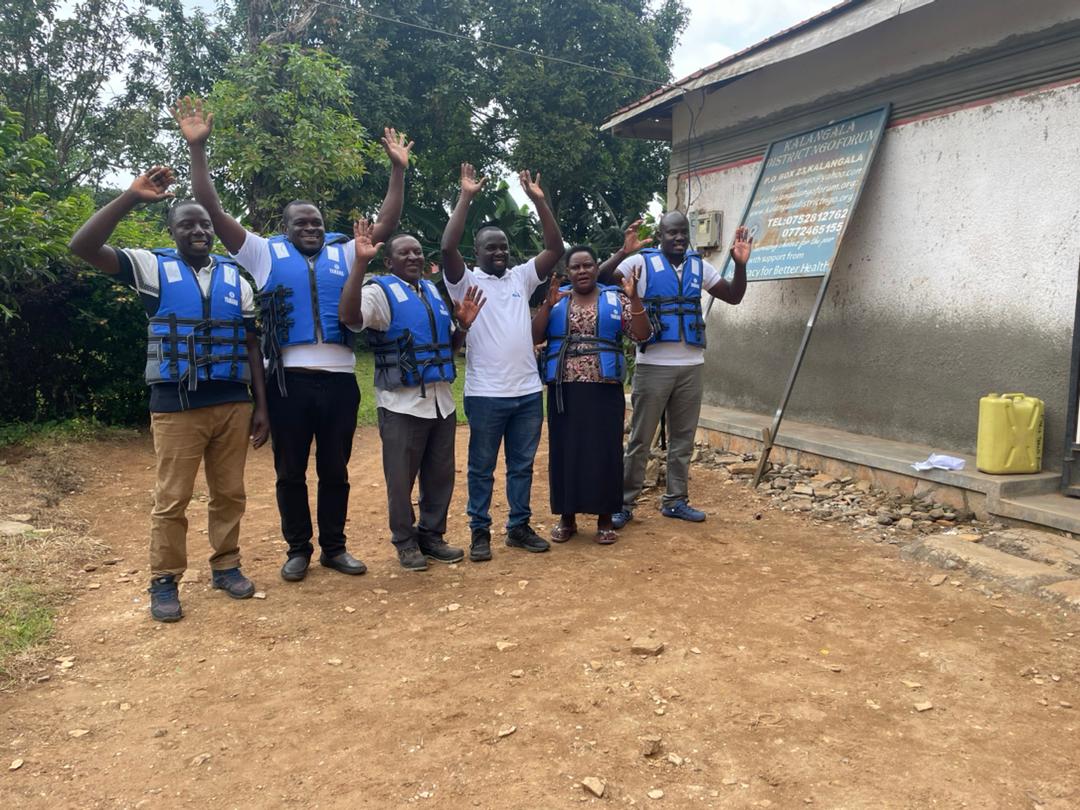
As part of its ongoing commitment to strengthen the institutional capacity of grassroots Human Rights Defenders (HRDs) in the Southern region, the National Coalition of Human Rights Defenders Uganda (NCHRD-U) has today delivered a brand-new desktop computer and life jackets to the Open Arms Community Development Initiative (OACDI) offices in Kalangala District.
This timely support is designed to enhance data security, documentation, and reporting of human rights violations, while also prioritising the safety of HRDs working across the Ssese Islands.
For organisations like OACDI, which serve communities in hard-to-reach areas, the provision of ICT tools will improve efficiency in evidence-based reporting, digital storage of sensitive information, and secure communication with partners. The life jackets, on the other hand, will provide essential protection for human rights defenders who often navigate Lake Victoria to reach remote island communities.
Speaking at the handover, representatives from NCHRD-U reaffirmed their dedication to supporting grassroots defenders who operate in risky environments. They emphasized that human rights work requires not only strong voices but also strong systems and tools to safeguard the defenders themselves and the communities they serve.
On behalf of OACDI, the Executive Director expressed deep appreciation for the support, noting that it will go a long way in strengthening the organizations’ mandate of promoting human rights, accountability, and social justice in Kalangala and beyond.
This initiative underscores the importance of collaboration between national and grassroots actors in ensuring that no community is left behind in the fight for human rights and dignity.
📌 About OACDI
Open Arms Community Development Initiative (OACDI) is a grassroot organisation based in Kalangala District dedicated to advancing human rights, environmental protection, health awareness, and community empowerment across the islands
Comments
Good work done ✅👍
September 12, 2025
Comments